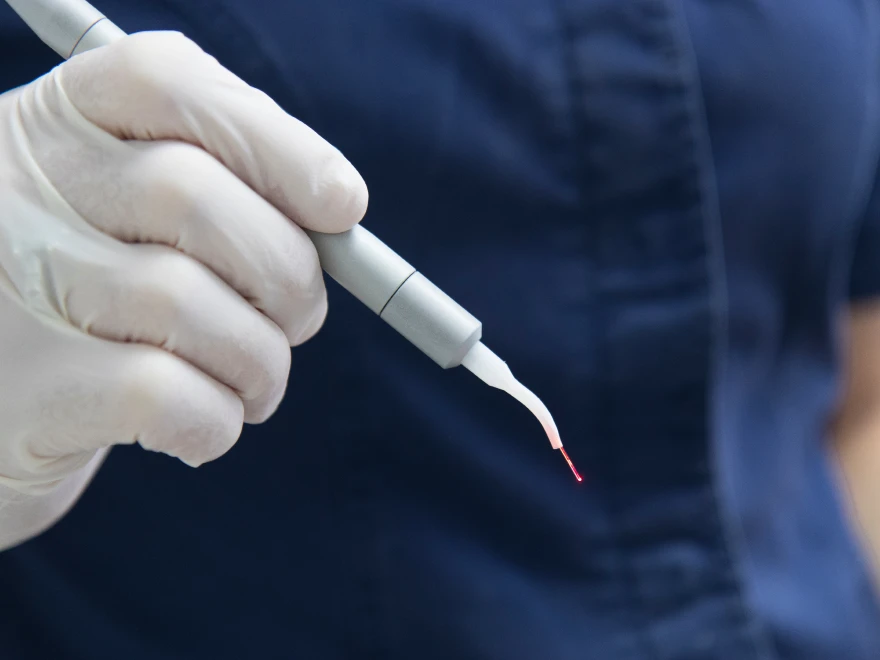

Our Technology
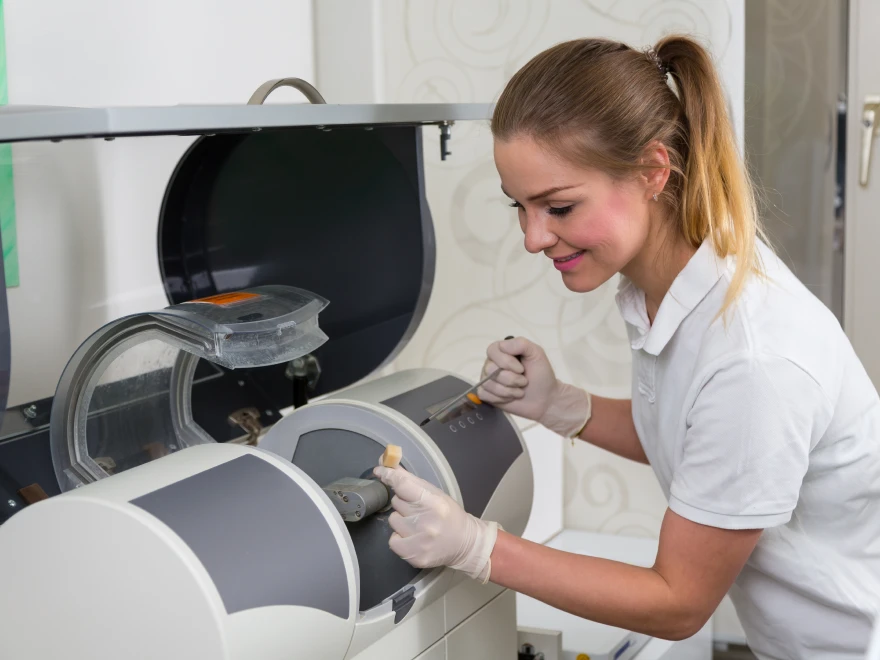
CEREC Same-Day Crowns
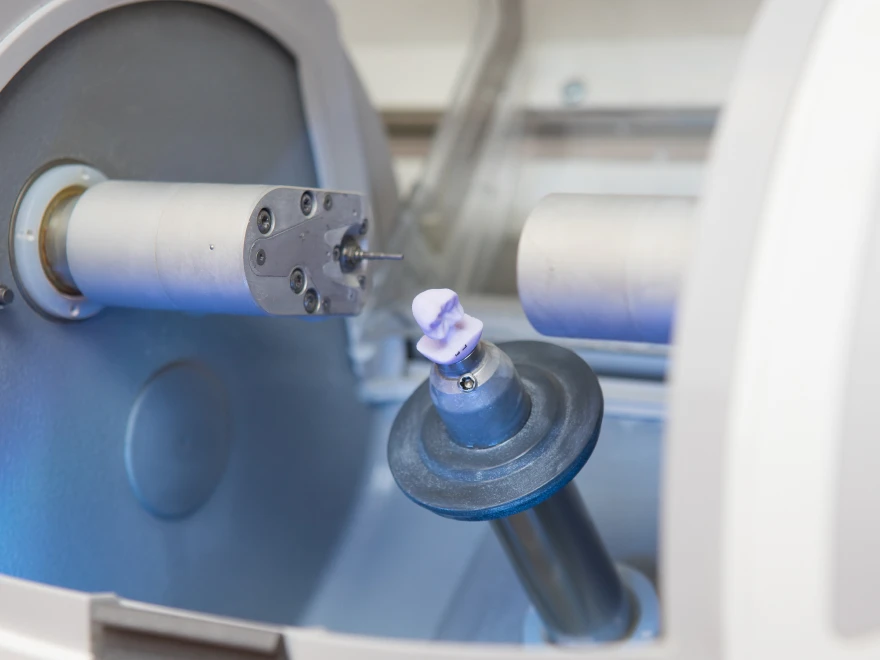
Traditional crowns require two appointments, a temporary crown, and a week or two of waiting. CEREC changes that. We design, mill, and place your permanent crown in a single visit, usually in about two hours.
There is no temporary crown to manage between appointments, no second injection, and no second visit. The crown is milled from a solid block of ceramic, matched to your tooth color, and bonded the same day.
For patients with busy schedules or anyone who dislikes the idea of wearing a temporary, this is a meaningful difference.
CBCT 3D Imaging
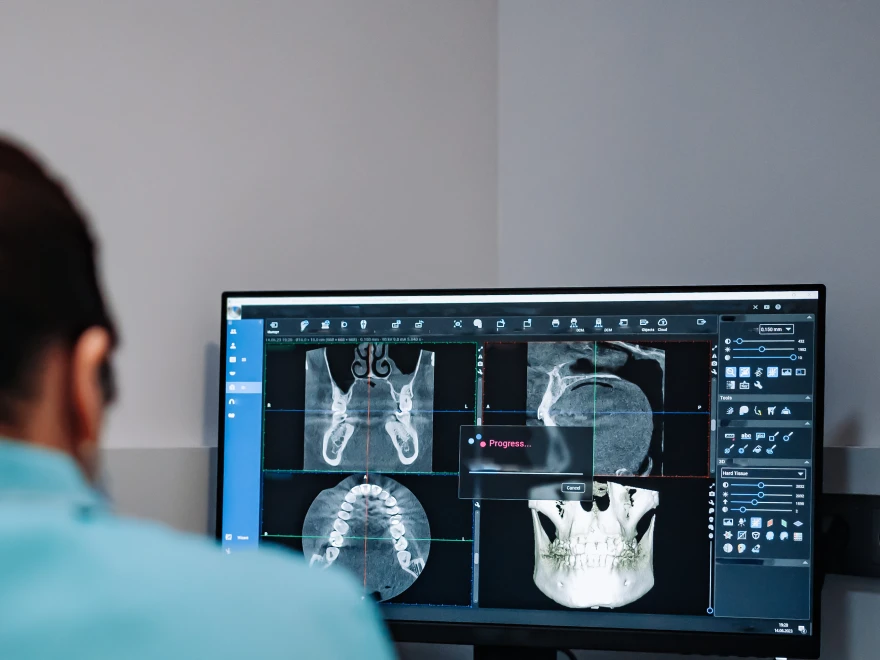
Standard X-rays show teeth in two dimensions. CBCT imaging gives us a full three-dimensional view of your teeth, jaw, bone structure, and surrounding anatomy, all in a single scan.
This matters most for implant planning. Before we place a single implant, we use CBCT imaging to map the exact position, angle, and depth, accounting for bone density, nerve location, and adjacent tooth roots. The result is more precise placement, fewer complications, and better long-term outcomes.
iTero Digital Impressions
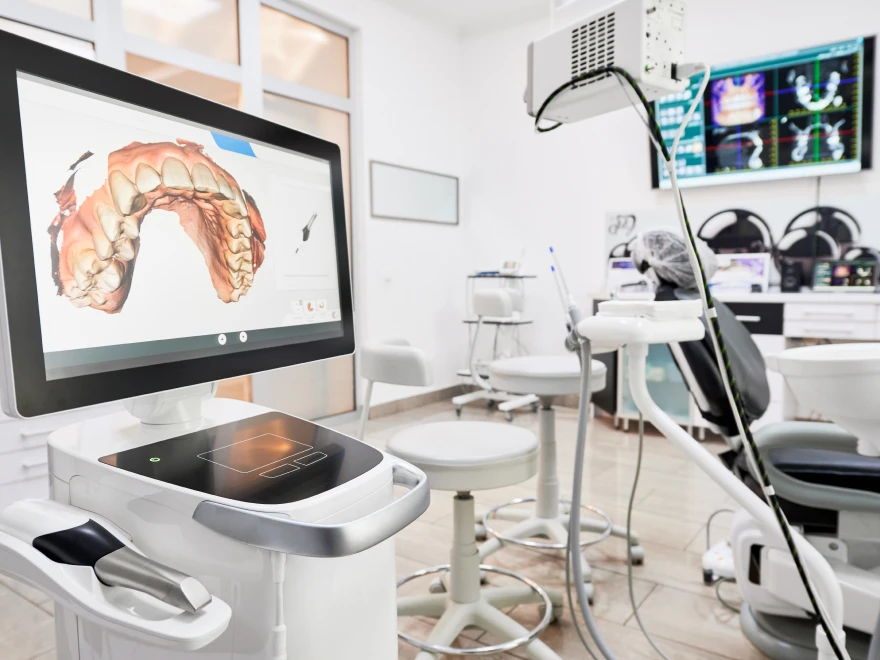
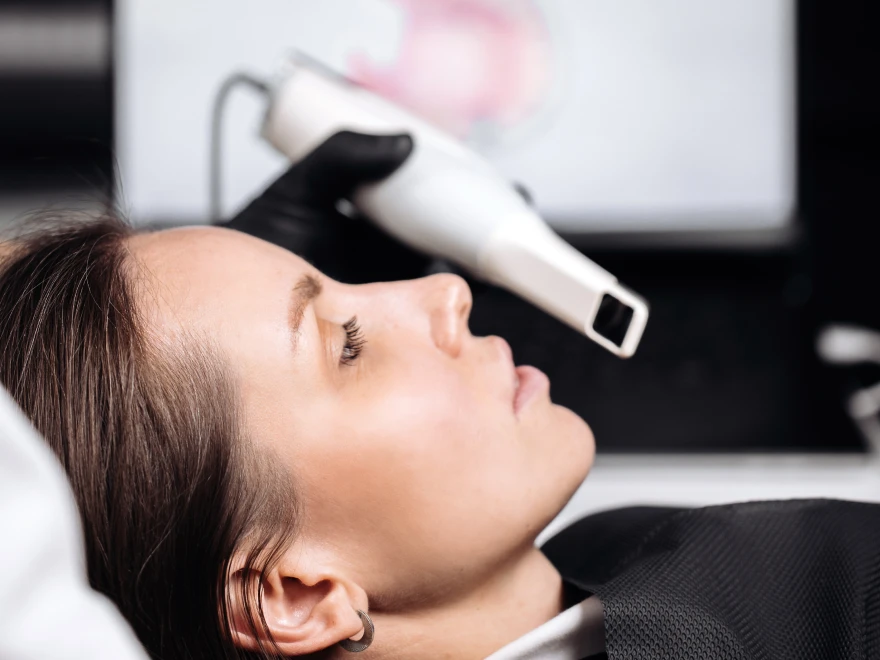
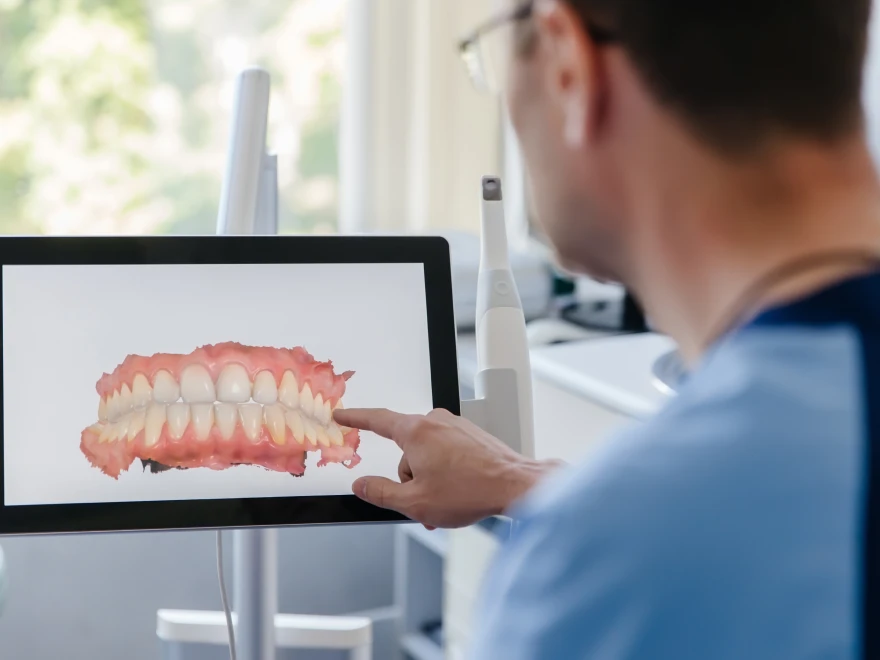
Traditional impressions involve a tray full of putty held in your mouth for several minutes. iTero replaces that with a handheld wand that scans your teeth digitally in a fraction of the time.
It is more comfortable, especially for patients with a sensitive gag reflex, and more accurate than physical molds; the digital scan captures detail that putty can miss. We use it for Invisalign treatment planning, crown prep, and other restorative work.
DEXIS CariVu Cavity Detection
CariVu uses transillumination, passing near-infrared light through the tooth, to detect decay that traditional X-rays can miss. It is particularly effective at catching cavities between teeth and in early stages, before they become larger problems.
Catching decay early means smaller fillings, less drilling, and less cost. It also means we are not watching a problem grow until it becomes unavoidable.
Intraoral Camera
The intraoral camera is a small, pen-sized device that captures real-time images inside your mouth and displays them on a screen you can see. When your doctor identifies a crack, a worn filling, or early gum recession, you will see exactly what they are looking at.
This isn't about convincing you of anything. It's about making sure you have the same information your doctor has when you're deciding what to do next.
CAD/CAM System
Our in-house CAD/CAM system is what makes same-day restorations possible. After your tooth is scanned, the system designs the restoration digitally and sends the specifications directly to our milling machine. The entire process, from scan to finished crown, happens in our office with no outside lab involved.
This keeps your care in one place, reduces turnaround time, and gives your doctor direct oversight of the final result.
Hiossen Implant System
We place implants using the Hiossen system, a clinically validated implant platform used by dentists worldwide. Implant success depends heavily on the quality of the components used. Hiossen implants are designed for osseointegration, meaning the implant bonds reliably with surrounding bone over time.
Combined with our CBCT imaging for pre-surgical planning, this gives patients a predictable, well-supported implant process from consultation through final restoration.